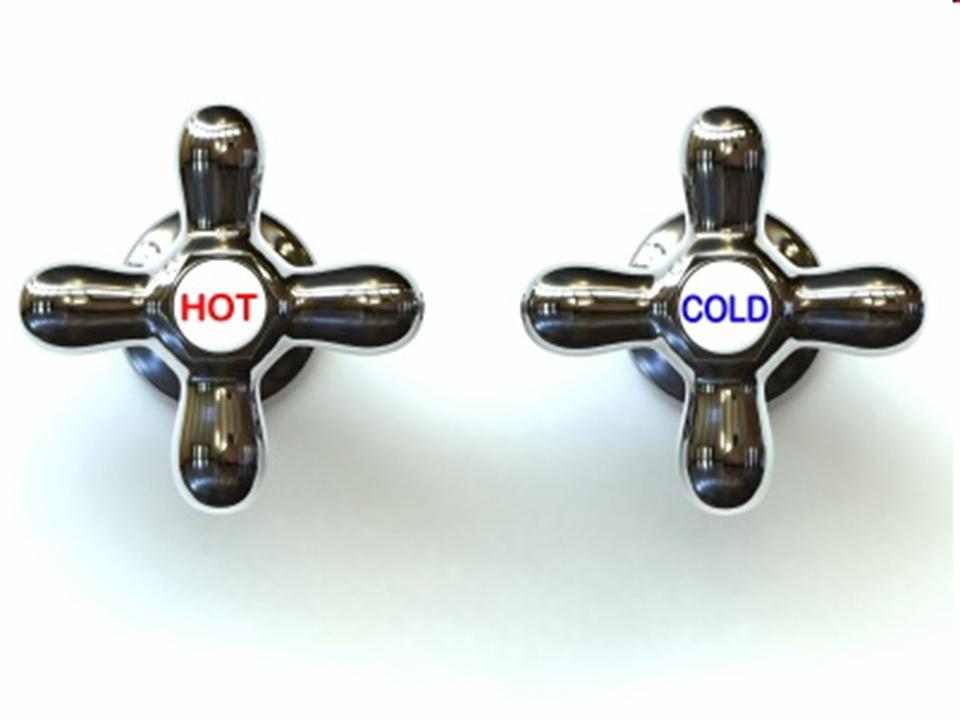
“I know your deeds, that you are neither cold nor hot. I wish you were
either one or the other!” – Revelations 3:15
As I write this, I’m sitting here at Chapman University –
they have a nice library that stays open pretty late. As I watch the students traveling around campus,
I feel a bit of nostalgia about academic life.
I love how you are presented with a sense of identity as soon as you
walk on any campus; buildings are decorated with plagues and flags identifying
core values, principles, mottos, and codes of ethics. You know what the school stands for right
away. One interesting evolution in this
has been the enforcement of new rules known as “zero tolerance policies”. You hear of these policies often in academia
and in the workplace; it’s essentially an organizations hard stance on
maintaining an environment of integrity that is consistent with their promoted
values. There are automatic consequences
for behaviors considered “unethical” (e.g. sexual harassment, cheating,
stealing). Zero tolerance policies are
just that – non-negotiable. Some have
argued that these policies are too rigid – what about the gray areas? Well, in the world of Zero Tolerance, the
gray doesn’t exist.
I get it; we don’t like hard lines – especially in this
country. We like lines that are fuzzy,
lightly shaded or, even better, dotted so we can slip in and out of boundaries
unnoticed. In this country, this land of
the free, we like the discretion to choose whether or not we are right or
wrong. Disagree? Think about that the
next time you get pulled over for speeding or running a red light and you
explain how “technically” you didn’t break the law.
Well schools or employers weren’t the first to come up with
Zero Tolerance policies. Zero Tolerance
is discussed in the Bible. In fact, the
whole point of sanctification as a believer in Christ is to recognize the hard
lines, good vs. evil, dark vs. light, holiness vs. sin, spirit vs. flesh. There
are things that draw us nearer to God and things that draw us further away.
Period.
Don’t stop reading yet.
I’m not going to hand you your spiritual pink slip or send you to
detention, but I am going to encourage you to stop giving yourself so many “outs”. Color in those lines, and start committing to “a
more excellent way” (1 Corinthians 12:31).
This isn’t about going around and writing up citations on others – this is
an inside job.
David’s personal Zero Tolerance policy can be found in Psalm
101:
“I will be careful to lead a blameless life
– when will You come to me? I will conduct the affairs of
my house with a blameless heart. I will not look with approval on anything that
is vile or vulgar” (v. 2-3)
Those
are some pretty hard lines! In this
context, David is using blameless as one who is perfect or godly.
Blameless
= zero tolerance of sin and ungodliness
That’s
a tall order. I’ve already established
that zero tolerance is not in our nature.
David knew that, which is why in the midst of his proclamation he asks a
powerful question. He asks God, “when
will you come to me?” as if to say “unless You come and help me, I cannot keep
this commitment”. And David was right. Unless we rely on God, we will fall short of
perfection every time.
Then
David makes another wise observation.
While Zero Tolerance policies tend to focus on the actions and conduct,
the policy has to start much deeper, which is why he then points to having a “blameless heart” (v.2). Our motives and conduct spring out of the
condition of our heart, right? So, the
goal isn’t focused on getting “brownie points” for good behavior, but pursuing
a blameless life by perfectly aligning our heart with God’s will.
Just
last week, I had one of my ladies in my woman’s group ask about this. Only Jesus can ever claim to be perfect,
right? True. As long as we’re wrapped in this pesky flesh,
we will never “arrive” at perfection.
But my answer to her was this – we are not perfect, but we are ALWAYS
perfecting. That means when we fall short, we get back up and get on track, when we sin, we repent and turn away from that
behavior, when the Holy Spirit pulls up beside us in His spiritual police car
and cites us for being out of line, we don’t make excuses or argue
technicalities, we own it and get it right.
That
is what zero tolerance means.
So I
want to ask you a few questions:
-
In your daily walk, are you seeking perfection or permission?
-
Where can you do a better job in employing a zero tolerance
policy in your own life?
When
you think about it, there was nothing “gray” about the cross. Jesus didn’t get to compromise or negotiate
his crucifixion. Death had no tolerance
for life. His sacrifice was
complete. His surrender was
perfect. That’s what Kingdom living is all
about. It’s all or nothing.
Let’s pray: Father God, help me to live a blameless life. Help me to adopt a zero tolerance policy and
be uncompromising in my pursuit of You.
I will live out Your word and Your promises; protecting my mind, body,
and spirit from those things that may cause me to negotiate when it comes to
holiness and purity. Renew my mind and
heart. Wash them with Your word. I lay myself down right now – all my sin. I yield to Your truths and what they say
about my thoughts and actions. I’m
drawing the line right now. No middle
ground. Your way or nothing at all. In Jesus name. Amen.

No comments:
Post a Comment